I partnered with Cynthia, a Marketing Specialist From Longan Craft to learn more about digital fabric printing. She wrote this article for us.
In the world of textiles and sewing, innovation continuously opens new doors for creativity and craftsmanship. One of the most exciting advancements in recent years is digital fabric printing—a technology that has revolutionized how designers and crafters create patterns and prints on fabric. Now we’ll explore what digital fabric printing entails, its benefits for crafters, and how it can be applied creatively for sewing projects.
What Is Digital Fabric Printing?
Digital fabric printing is a process where designs are printed directly onto textiles using large-format inkjet printers. Unlike traditional methods such as screen printing, where each color requires a separate stencil and setup, digital printing allows for the application of complex, multicolor designs in one seamless process. This technology enables high-resolution images with intricate details, gradients, and vibrant colors that were difficult or costly to achieve with older techniques.
Instead of manually preparing screens or plates, digital files (such as JPEGs or PDFs) are sent straight to the printer, which applies dye-based or pigment-based inks onto the fabric’s surface. This method is highly versatile and works on various fabric types including cotton, silk, polyester, linen, and blends.
Key Advantages of Digital Fabric Printing for Crafters
Digital fabric printing offers numerous benefits that make it an increasingly popular choice among crafters and designers.
Unlimited Design Possibilities
One of the most significant benefits of digital printing is the freedom it offers in terms of design complexity and customization. Crafters can print detailed photographic images, subtle textures, or bold abstract patterns with ease. There are virtually no restrictions on color count or blending—allowing for full-color prints with rich gradients and precise motifs.
This capability is especially valuable for sewing enthusiasts who want to create unique fabrics tailored specifically to their projects rather than relying on mass-produced patterns.
Faster Turnaround Time and Lower Minimum Orders
Traditional textile printing often involves long setup times and minimum order quantities to justify the costs of making screens. Digital printing dramatically reduces setup time since it works directly from digital designs. This means crafters can order small quantities or even single custom yards of fabric without exorbitant costs or waste.
Eco-Friendly Benefits
Digital fabric printing is generally more environmentally friendly than traditional methods. It uses less water and fewer chemicals during production since the ink is applied precisely where needed rather than flooding the entire screen. Moreover, many printers use eco-conscious inks that are low in volatile organic compounds (VOCs) and free from harmful heavy metals.
For crafters committed to sustainability, digital printing offers a way to minimize environmental impact while still producing vibrant, high-quality fabrics.
Customization for Personal Projects
Because the process is driven by digital files, digital fabric printing allows for easy customization. Crafters can modify patterns, change colors, or incorporate personalized elements like monograms or logos before printing. This makes it perfect for creating bespoke garments, home décor items, or limited-edition collections with a truly individual touch.
Creative Applications: Unlocking New Possibilities Across Various Fields
Digital fabric printing is much more than a practical tool—it’s a gateway to innovative and diverse creative applications across multiple fields. This technology empowers crafters, designers, and artists to explore new frontiers of textile design with precision and flexibility.
- Fashion and Apparel Design: In the world of fashion, digital fabric printing enables designers to bring intricate patterns, vibrant colors, and unique textures to life without the limitations of traditional methods. From high-fashion runway collections to everyday casual wear, this technology allows for customization and rapid prototyping, making it ideal for creating both limited-edition pieces and personalized garments.
- Home Décor and Interior Design: Digital fabric printing is widely used in interior design for creating custom upholstery, curtains, cushions, and wall coverings. This approach allows homeowners and designers to match or complement room aesthetics with personalized fabric designs that reflect individual taste and style.
- Art and Craft Projects: Artists and crafters benefit from the freedom to translate their original artwork directly onto fabric surfaces. Whether for quilting, patchwork, or textile art, digital printing facilitates the creation of one-of-a-kind pieces that combine fine art with fabric craftsmanship.
In each of these areas, digital fabric printing blends creativity with technology—opening doors for experimentation, personalization, and sustainable production that were previously difficult or impossible to achieve.
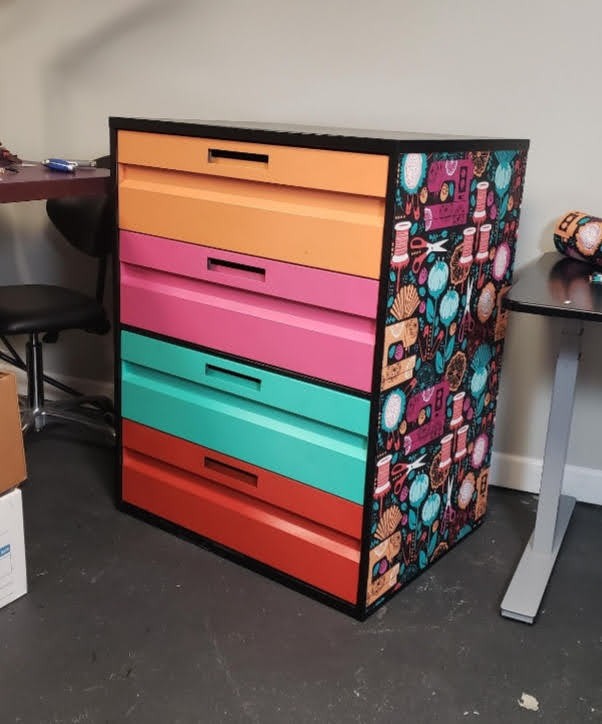
Ninja Note: I got peel and stick wallpaper printed that I used for my sewing pattern cabinet Glow-up. I just loved all of the options. This super sewing design is called “Garden of Sewing Supplies – Black” Design by run_quiltgirl_run
Tips for Crafters Using Digital Printed Fabrics
To get the most out of digitally printed fabrics, consider the following:
- Choose Compatible Fabrics: Cotton, linen, silk, and polyester blends generally work well with digital printing. Fabrics take color differently with synthetic fabrics generally, but not always, being more vivid.
- Plan Your Colors Carefully: While digital printing allows full-color designs, colors may appear differently on screen compared to fabric. Request samples if possible to verify color accuracy.
- Design with Repeat Patterns in Mind: For larger projects like dresses or curtains, ensure your design tiles seamlessly to avoid visible breaks in the pattern.
- Follow Care Instructions: To preserve print vibrancy and fabric integrity, follow recommended washing guidelines—usually gentle cycles with mild detergents.
Popular Sites for Fabric Printing
- Fabric On Demand specializes in custom fabric printing, allowing customers to print their own designs on a wide range of high-quality fabrics.
- Contrado offers premium custom fabric printing services, enabling designers and brands to print original artwork on a wide variety of high-quality fabrics.
- Longan Craft provides custom fabric printing services with a focus on vibrant color, fine detail, and bulk order quantities.
Ninja note: And of course Spoonflower which has a marketplace of designs by large and small designers.
Conclusion
Digital fabric printing is transforming how crafters approach textile design by offering unparalleled creative freedom, customization, and sustainability benefits. Whether you’re recreating historical costumes like an 18th-century gown or designing edgy modern hoodies inspired by Renaissance fashion, digital printing provides the perfect canvas for your vision.